Why Indigenous Plants Matter at Outeniquasbosch
Why Indigenous Plants Matter at Outeniquasbosch
Outeniquasbosch sits within one of the richest floral regions on Earth. The Cape Floral Kingdom covers less than 90,000 square kilometers, yet it holds around 8,500 plant species, roughly two-thirds of which occur nowhere else on the planet. Our estate’s own vegetation is a mosaic of four of this region’s habitat types: Fynbos, Renosterveld, Thicket, and Thorny Bushveld. Every indigenous plant on our approved list is a piece of that mosaic, and every garden planted from it is a small act of restoring habitat that took thousands of years to evolve and, in places, only decades to disturb.
Four Habitats, One Estate
Our Landscaping Master Plan matches planting to whichever of these habitats already occurs naturally in each phase of the estate, rather than applying one look everywhere.
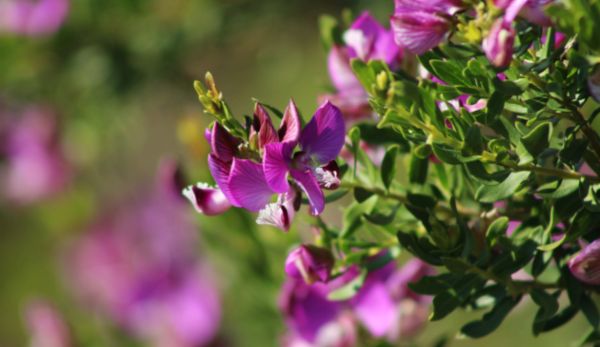
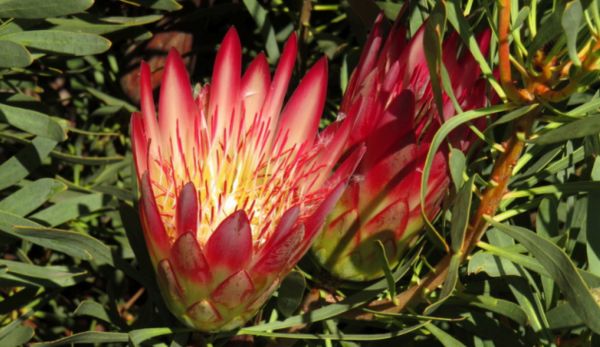
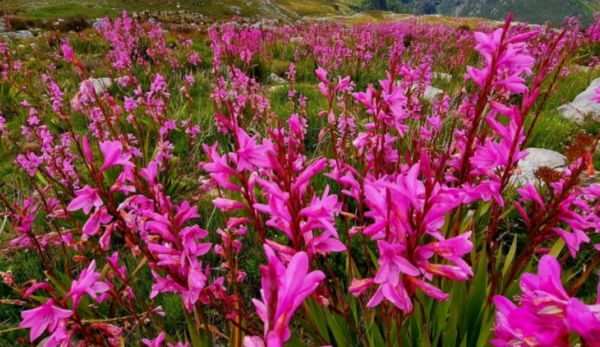
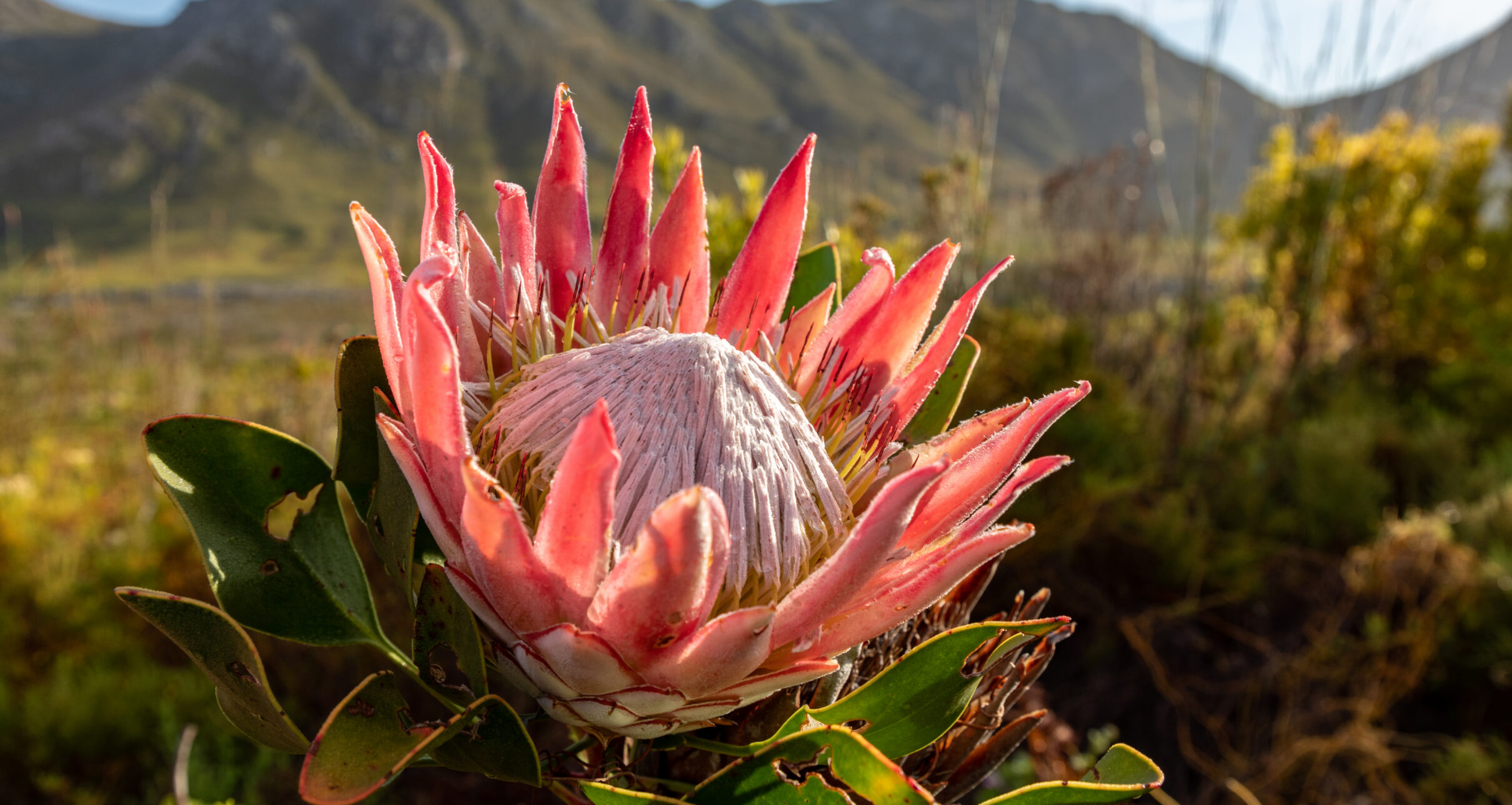
- Fynbos carries the greatest number of plant species and the highest levels of endemism of the four, and it is where most of the region’s endemic amphibians, birds, and mammals are found. On our higher, mountain-facing phases, it appears alongside Thicket as the vegetation transitions, bringing in Ericas, Leucadendrons, and other Proteaceae, Ericaceae, and Restionaceae species.
- Renosterveld occupies lower-lying, more fertile ground and is one of the most transformed and least protected habitats in the country, which makes the patches within our estate more valuable than their size suggests. It is dominated by Renosterbos, September bush, and Wild Rosemary, with Blombos and succulents such as vygies filling in the gaps.
- Thicket fills in the more sheltered, wooded phases, including our Valley Thicket areas, adding structural diversity, browse, and shelter that neither Fynbos nor Renosterveld provide on their own. Typical species include Searsias, Bietou, Aloes, Karoo Boer-Bean, and Spekboom.
- Thorny Bushveld appears in our warmer, lower phases, often intermixed with Mountain Fynbos, and is built around Sweet Thorn and other thorny trees alongside a wide variety of Thicket and Fynbos species.
Recreating this mosaic phase by phase, rather than replicating any one habitat everywhere, is what allows the estate to function as a single connected landscape instead of a patchwork of disconnected gardens.
Why It Matters Beyond Looks
Indigenous plants are not simply the “correct” choice on principle. They carry real functional value:
- Wildlife dependency: many species that move through Outeniquasbosch, from impala and giraffe to porcupine and the smaller predators and birds that share the estate, rely on indigenous vegetation for food, cover, and breeding habitat. Exotic plants, however attractive, generally offer none of this.
- Water and soil fit: indigenous species are adapted to our rainfall patterns, soils, and fire regime. They need less irrigation, less intervention and less replacement once established, which is also why they hold up better in unfenced open gardens and rehabilitation areas exposed to grazing.
- Genetic and ecological integrity: because many of these species are narrowly endemic, found in this region and nowhere else, planting them (rather than look-alike exotics or plants from other parts of South Africa) keeps the gene pool and the ecological relationships in our immediate area intact.
- Invasion resistance: a garden built on species that belong here is inherently less likely to become a source of invasive spread into neighboring rehabilitation and green areas, which is one of the ongoing management challenges across the wider estate.
Where This Shows Up In Your Garden
This is also the practical reason behind several rules in our Landscape Manual. Open Private Gardens and rehabilitation areas require indigenous species specifically because these areas are exposed to wildlife and feed directly into the estate’s habitat corridors; a bed of exotics there breaks the mosaic rather than extending it. Even in Enclosed Private Gardens, where more freedom is allowed, indigenous planting is preferred for the same reason, just with lower stakes since wildlife cannot reach it.
Rehabilitation area tree planting in bush clumps of three trees and five shrubs is not an arbitrary formula either. It mimics how Fynbos, Renosterveld, Thicket, and Thorny Bushveld species naturally cluster and support one another in the wild, which is part of why it works better than evenly spaced, ornamental planting.
Getting Started
The Approved Plant Species List, available in the Documents section of the estate website, is the starting point for any planting decision on your erf. Future articles in this section will go deeper into specific plants: which ones suit which garden type, their wildlife value, and how to source and establish them successfully. If you are unsure whether a plant belongs here, the Landscaping Committee can help before you plant, not after.