Designing with Renosterveld
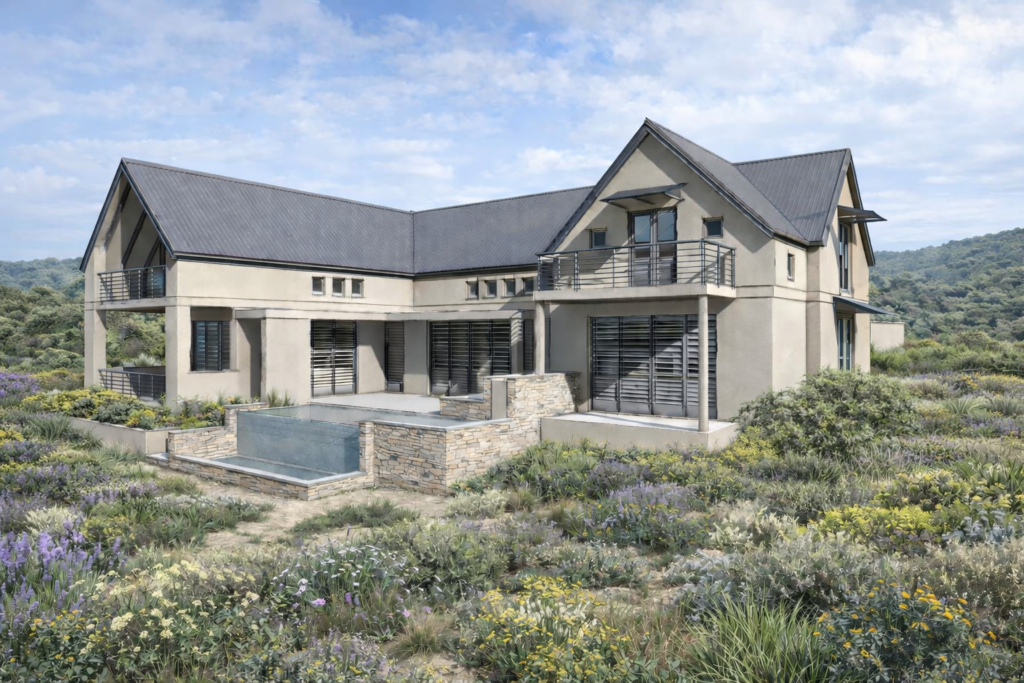
Designing with Renosterveld: The Quiet Show-Stopper of the Southern Cape
Renosterveld is the understated cousin of the showier fynbos — and once you learn to read it, it’s every bit as captivating. Where fynbos thrives on the poor, sandy, acidic soils of our slopes, renosterveld grows on the richer clay and shale soils of the lowlands, and it wears a different look entirely: silvery grey-green shrubs, soft grasses, and — its real party trick — an astonishing abundance of bulbs that erupt into colour each spring.
It’s also one of the most threatened vegetation types in the country. Lowland renosterveld has been so heavily cleared for agriculture that only fragments remain, which makes every garden planted in its spirit a small act of conservation. Restore a patch of renosterveld on your erf and you’re not just gardening — you’re rebuilding something the wider landscape has largely lost.
Here’s a practical, locally appropriate palette to get you started.
Structural shrubs: the backbone
These give you year-round structure and that classic grey-green renosterveld character.
- Renosterbos (Dicerothamnus rhinocerotis) — the signature species that gives the veld its name. Tough, tidy and unmistakable.
- Blombos (Metalasia muricata) — fine-textured, aromatic and excellent for mass planting.
- Wild rosemary (Eriocephalus africanus) — soft, silver foliage, a lovely scent, and a magnet for pollinators.
- Bitou (Osteospermum moniliferum) — hardy, fast-growing and superb for stabilising disturbed ground. A word of caution: it’s a vigorous pioneer that can crowd out slower neighbours, so give it room and keep an eye on it rather than letting it run the show.
- Geelblombos (Athanasia dentata) — neat in form, with cheerful honey-scented yellow button flowers and excellent water-wise credentials. It occurs naturally right through our area, from George eastwards.
Flowering perennials and sub-shrubs
These bring colour without turning the garden into a high-maintenance diva.
- Felicia bushes (Felicia filifolia / Felicia echinata) — delicate blue daisies that pop beautifully against grey foliage.
- Karoo gazania (Gazania rigida) — low, spreading and full of cheerful yellow-to-orange colour, and genuinely local to the southern Cape.
- Honey euryops (Euryops virgineus) — masses of soft, honey-scented yellow flowers on a relaxed, natural habit.
- Helichrysum species — silvery leaves, tough constitutions and long-lasting everlasting blooms.
Geophytes: the spring fireworks
This is the layer that makes renosterveld unforgettable, and the one no renosterveld planting should be without. The Cape lowlands are one of the richest bulb habitats on Earth, and these geophytes lie dormant through summer before bursting into bloom after the winter rains.
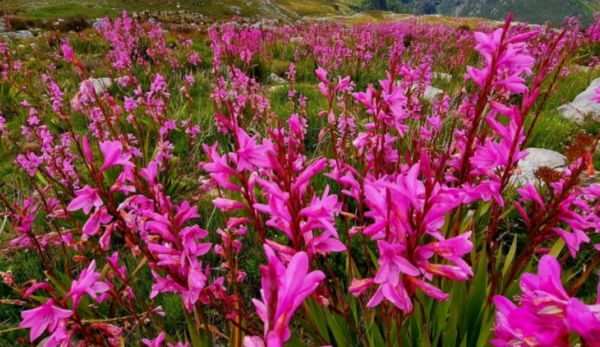
- Watsonia (Watsonia species) — tall, architectural spikes of pink, red or white in spring.
- Cobra lily (Chasmanthe aethiopica) — arching orange tubular flowers that sunbirds adore.
- Pink afrikaner (Gladiolus caryophyllaceus) — fragrant pink spring spikes that are pure renosterveld.
- Candelabra flower (Brunsvigia orientalis) — dramatic red firework heads that erupt after the first rains.
- Evening flower (Hesperantha falcata) and Knikker (Romulea luteoflora) — low and jewel-bright, and lovely massed in informal drifts.
Plant these in generous, informal sweeps between and beneath the shrubs, and simply leave them be — they’ll multiply and return year after year.
Grasses and ground covers
Essential for that open, natural feel, and for holding the soil together.
- Red grass (Themeda triandra) — iconic and dynamic, especially striking when it colours up in autumn.
- Common veld grass (Ehrharta calycina) — a soft, fine grass that weaves the planting together.
- Twin-leaf (Roepera morgsana) — a tough, slightly succulent subshrub for hot, dry, sunny corners. (It naturally hails from drier Karoo and coastal areas, but earns its place as a hardy, low accent rather than a true ground cover.)
Large shrubs and small trees — used sparingly
Renosterveld is naturally open, so trees should act as occasional accents rather than forming a canopy.
- Blue kuni-bush (Searsia glauca)
- Dune crow-berry (Searsia crenata)
- Dune guarri (Euclea racemosa) — where space allows; its berries are a favourite with birds.
A garden that works for wildlife
Renosterveld pulls its weight in a wildlife village. The bulbs feed mole-rats, porcupines and a host of insects; the seeds feed birds; the open, grassy structure suits tortoises and small mammals; and the nectar-rich flowers — the watsonias, chasmanthe and euryops especially — keep sunbirds and bees busy. Plant this way and your erf becomes a genuine stepping stone in the estate’s wildlife corridors.
Design tips: the secret sauce
- Plant in loose, natural-looking clumps rather than neat rows.
- Leave some open ground — renosterveld isn’t meant to feel crowded.
- Avoid rich composts and fertilisers; these plants prefer lean soils and will sulk if overfed.
- Water only during establishment (that first season or two). After that, they’re happily independent and genuinely water-wise.
- Resist the urge to over-tidy. A little looseness is exactly the look you’re after.
Where this palette fits best
Based on soil type, wind exposure and slope, this palette suits the relevant development phases across the estate particularly well. Conditions vary from erf to erf, though, so if you’re unsure whether a species will thrive in your spot, it’s always worth checking before you plant.
Before you plant: a friendly reminder
All landscaping at Outeniquasbosch is guided by our Approved Plant List and Landscape Manual, which keeps our gardens indigenous, water-wise and ecologically in step with the reserve around us. Every species here reflects that ethos. Before starting a new project, please check your choices against the Approved Plant List and submit your landscaping application for approval — we’re always glad to help you plan something both beautiful and a perfect fit for our environment.
Renosterveld asks for a little patience and a willingness to appreciate subtlety — and then, come spring, it rewards you spectacularly. It’s a garden that belongs here, gives back to the wildlife around it, and helps preserve a piece of the Cape that’s becoming rarer by the year.