Designing with Fynbos
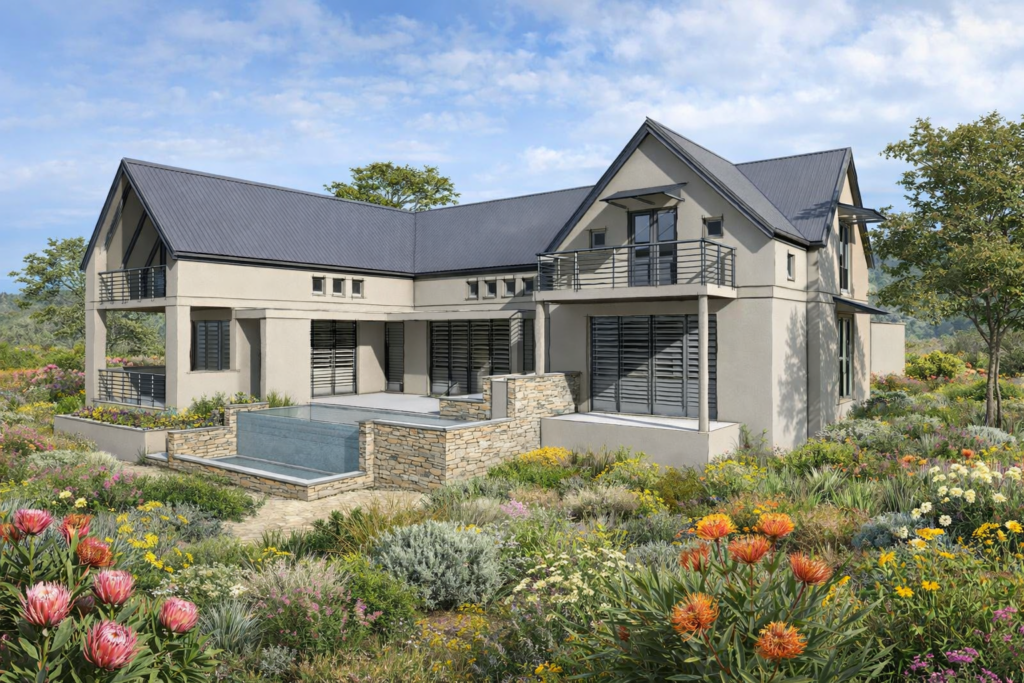
Designing with Fynbos: Creating a Garden That Belongs at Outeniquasbosch
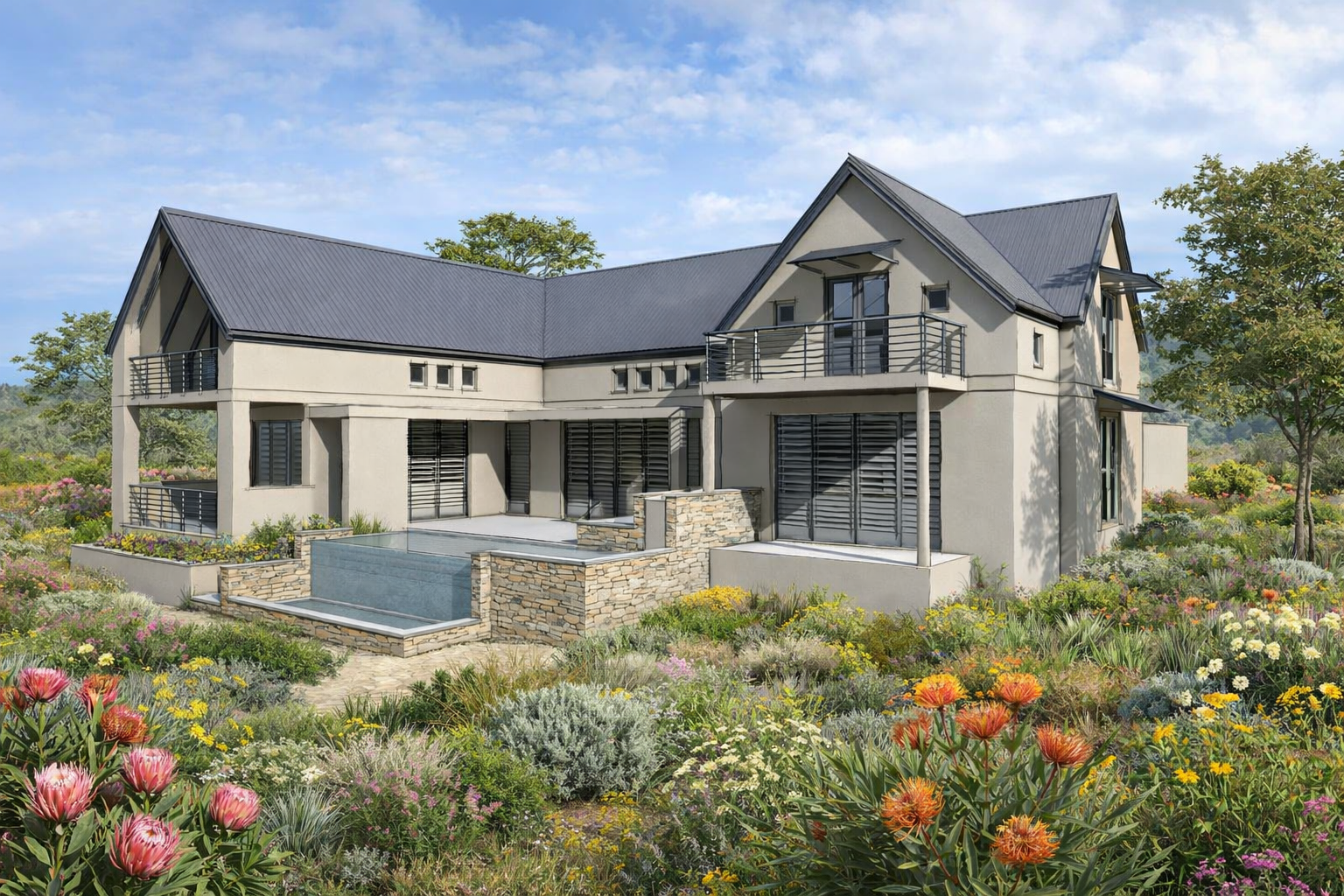
There’s a particular kind of beauty in a garden that looks as though it has always been there. At Outeniquasbosch Wildlife Village, the most successful gardens aren’t the ones that impose order on the landscape — they’re the ones that borrow from it. A fynbos-inspired garden is less a garden in the traditional sense and more a small piece of the surrounding hillside, invited in.
That shift in thinking is the key to everything that follows. Forget straight rows, rigid spacing, and clipped symmetry. A fynbos planting is meant to feel loose, layered and a little untamed — echoing the vegetation that naturally clothes the slopes and coastal terraces of the Garden Route. Done well, it rewards you with a water-wise, low-maintenance garden that offers year-round colour and texture, supports local wildlife, and blends quietly into its surroundings.
Here’s how the pieces come together.
Start with structure
Every good fynbos planting has a few bold anchor plants that set its character and carry the strongest seasonal colour. These are your focal points — the plants the eye lands on first.
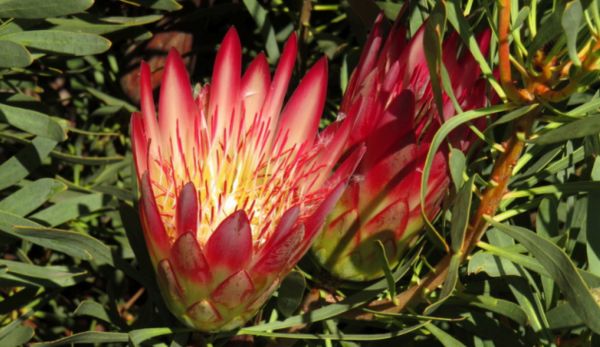
- Oleander-leaf protea (Protea neriifolia) — a naturally local sugarbush that grows along our own southern coastal ranges, which makes it a fitting centerpiece. It forms a shrub of around three meters, with large, bearded flower heads that range from creamy-green through silvery pink to deep carmine in winter, and it’s one of the easier, more forgiving proteas to grow.
- Pincushion protea (Leucospermum cordifolium) — vivid orange flower heads and striking texture, and a magnet for sunbirds.
- Sunshine conebush (Leucadendron salignum) — dependable colour from its bracts almost year-round, tying the whole scheme together.
A quick but important note on this group: proteas, pincushions and conebushes are members of the Proteaceae family, and they have particular needs. They want full sun, well-drained, sandy, acidic soil, and very little feeding. They are highly sensitive to phosphates, so avoid standard fertilizers and bonemeal — these can kill them. Get the soil and drainage right and they will reward you for years; ignore it and they will sulk.
Use trees sparingly
Trees frame a space and soften nearby buildings, but in a fynbos setting they’re used with restraint to keep that open, airy feel.
- Wild peach (Kiggelaria africana) — evergreen, reliable in our climate, and a genuine wildlife workhorse. It’s the host plant for the Garden Acraea butterfly, and its fruit draws a steady stream of birds. (It’s worth knowing that male and female flowers grow on separate trees, so only female plants produce the fruit that birds love.)
- Cheesewood (Pittosporum viridiflorum) — glossy foliage and quiet resilience, ideal as a calm background element.
- Wild olive (Olea europaea subsp. africana) — timeless, wind-tolerant, and perfectly at home in exposed coastal conditions, with fruit that feeds birds.
One practical caution with the wild olive: it’s a generous grower, reaching a spreading crown of roughly 9 by 12 meters at maturity, and its roots can be assertive. Give it room, and keep it clear of walls, paving, patios, and pools. On smaller erven, place it thoughtfully or choose a more compact alternative.
Build the layers with shrubs
Medium shrubs are the connective tissue of the garden. They fill space, create natural layers, and soften the hard edges around buildings and pathways.
- Wild rosemary (Eriocephalus africanus) — fine, silvery foliage that lifts and brightens the whole palette.
- Buchu (Agathosma species) — aromatic, neat and rounded, and loved by pollinators.
- Blombos (Metalasia muricata) — soft, cloud-like texture that melts seamlessly into surrounding fynbos.
- Fire heath (Erica cerinthoides) — one of the most reliable garden ericas, with long-lasting tubular red flowers that sunbirds can’t resist.
- Two-colour heath (Erica discolor) — hardy and undemanding, flowering over many months in soft pink-and-green tones.
Ericas are a natural partner for the proteas, and well worth weaving through this layer. They belong to the same fynbos community and ask for the same conditions — full sun and acidic, well-drained, low-phosphorus soil — so they settle in alongside your sugarbushes without any fuss. The contrast is lovely, too: their fine, bell-shaped flowers play beautifully against the bold protea heads, and like the proteas they keep the sunbirds coming. Do bear in mind that ericas are relatively short-lived (around ten to fifteen years) and respond well to a light prune after flowering.
Let groundcovers carry the colour
Closer to the ground, spreading plants create a meadow-like feel and deliver bursts of seasonal colour. (These are drawn from the wider Cape flora rather than strict fynbos, but they’re indigenous, hardy and they complement the scheme beautifully.)
- Blue felicia (Felicia amelloides) — cheerful blue daisies scattered through the beds.
- Trailing gazania (Gazania rigens) — a tough groundcover in bright yellow and orange.
- Ivy-leaved pelargonium (Pelargonium peltatum) — spreading gently between shrubs with soft pink and mauve tones.
Add movement with grasses and restios
Movement is what makes a fynbos garden feel alive. Grasses and restios catch the wind and the light, giving the planting rhythm and that unmistakable Cape character.
- Restio species — the signature of fynbos: upright, elegant, and authentic.
- Gongoni grass (Aristida junciformis) — also known as Ngongoni grass, this hardy, wispy tufted grass thrives in coastal conditions and sways beautifully in the breeze.
A garden that works for wildlife
This is where a fynbos garden really earns its place in a wildlife village. The proteas, pincushions and ericas are nectar stations for sunbirds; the wild peach feeds caterpillars and fruit-eating birds; the buchu, felicia and gazania draw bees and other pollinators. Plant this way and you’re not just decorating your erf — you’re extending the estate’s wildlife corridors right up to your doorstep.
Getting it established
A fynbos garden is water-wise and low-maintenance — once it’s established. The first year or two are the exception. New plantings need regular, careful watering to settle their roots, after which you can ease right off and let them live on what nature provides. Group plants in natural drifts and clusters rather than neat rows, mirroring the way they grow on the surrounding hillsides, and resist the urge to over-tidy. A little wildness is the whole point.
Where this palette fits best
Based on soil, slope and sun exposure, this planting palette suits open, sunny areas particularly well — including the relevant development phases across the estate. Conditions do vary from erf to erf, so if you’re unsure whether a species will thrive in your spot, it’s always worth asking before you plant.
Before you plant: a friendly reminder
All landscaping at Outeniquasbosch is guided by our Approved Plant List and Landscape Manual, which exist to keep our gardens indigenous, water-wise, and ecologically in step with the reserve around us. Every species mentioned here reflects that ethos. Before starting a new planting project, please check your choices against the Approved Plant List and submit your landscaping application for approval — we’re always happy to help you plan a garden that’s both beautiful and a perfect fit for our environment.
A fynbos garden asks you to work with the southern Cape rather than against it. In return, it gives you something genuinely special: a resilient, biodiverse, ever-changing landscape that feels like it grew straight out of the hills — because, in spirit, it did.