
Kambaku Street
↩ GO BACK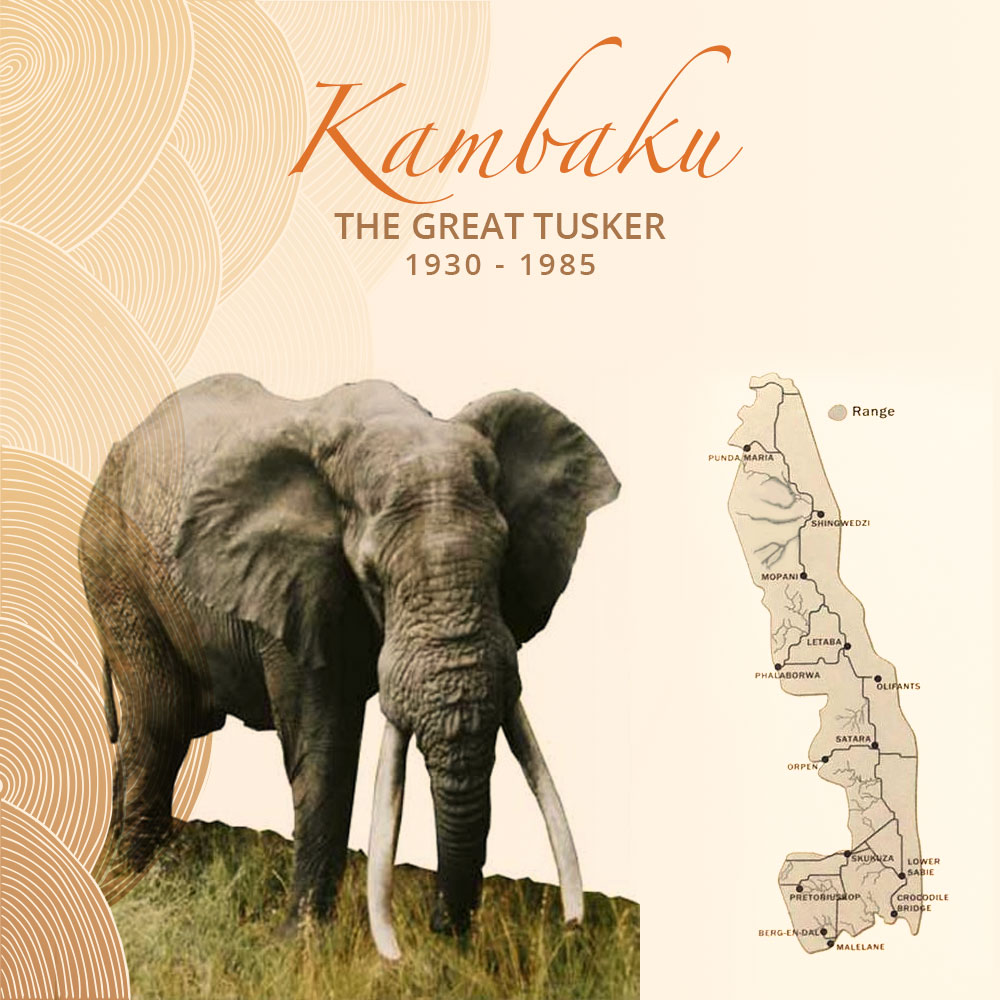
Kambaku, The Great Tusker demanded respect with tusks that weighed nearly 130kg and measuring in at 2.6 metres each. This loner was the 3rd of the great Kruger bulls to be recognised as one of ‘The Magnificent Seven’.
He was euthanized in 1985 after suffering a debilitating wound while grazing on a nearby sugarcane plantation.
Age
Kambaku, a Tsonga word, is used in great reverence and respect for this most magnificent of The Big 5 African animals and translates to The Great Tusker. This lone wanderer was unique in physical appearance, not only because of his awe inspiring ivory shafts, but he had a few other distinctive characteristics.
In 1985, Kambaku was wounded in his knee while foraging near a crossing on The Crocodile River in a nearby sugarcane plantation. Ranger Lynn van Rooyen made the heartbreaking decision to put the magnificent beast out of his misery when it became evident that the infection was causing the great tusker immense pain. He was 55 years old when he died.
Range
Kambaku was one of the most photographed of the Magnificent Seven even though he spent most of his time alone. Crossing vast distances, he moved between Timbavati Game Reserve all the way to the Crocodile Bridge Rest Camp, but preferred to move up north during the rainy season.
Tusks
With tusks weighing in at nearly 130 kg and both more than 2,5 metres long, Kambaku more than deserves his Tsonga name that translates to Great Tusker.
| TUSK DATA | LEFT TUSK | RIGHT TUSK |
|---|---|---|
| Length | 259cm | 265cm |
| Weight | 64kg | 55.1kg |
| Circumference at base of lip | 51cm | 52cm |